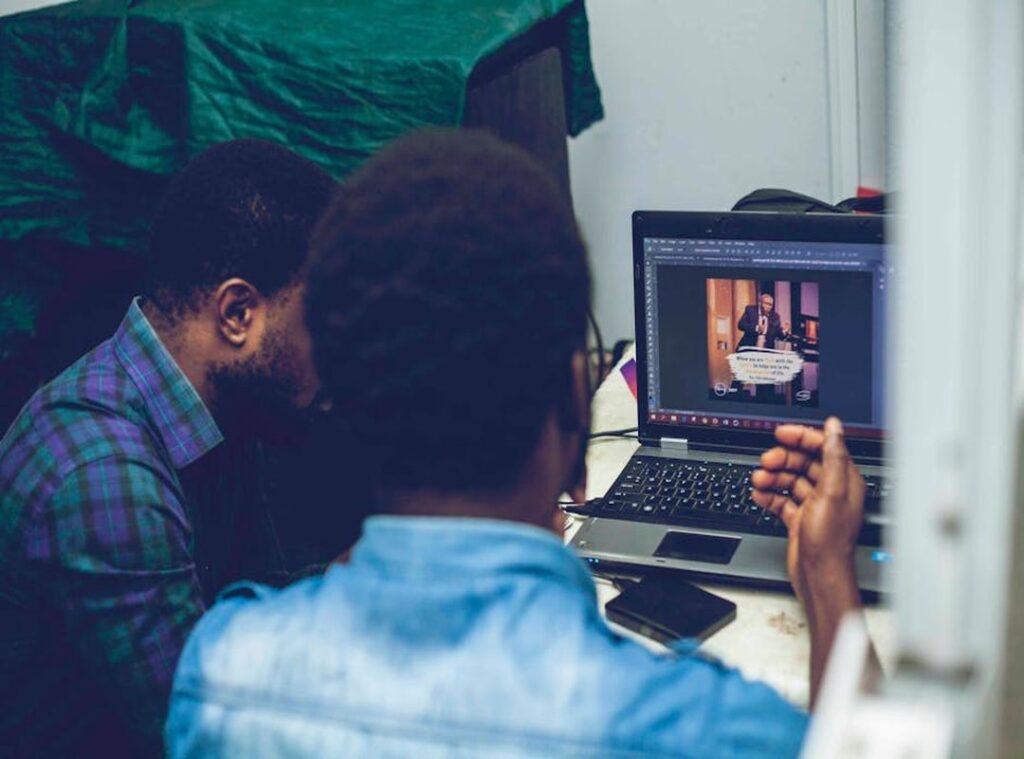
You stared at that blank canvas for twenty minutes.
Then closed the app.
Not because you’re bad at this. But because every tutorial starts with a $39/month subscription or promises “pro results in 7 days” (they don’t).
I’ve been there. And I wasted months on courses that taught me how to click buttons (not) how to see like a designer.
This isn’t one of those.
It’s How to Learn Graphic Design for Free Gfxdigitational (no) trials, no bait-and-switch, no “free tier” that blocks real work.
We tested every tool here. Used each one for at least 10 hours. On real projects.
Not demos. Not screenshots.
Some worked. Some crashed. Some felt like learning Latin without a dictionary.
You’ll get only what actually works.
No fluff. No upsells. No “just watch this 4-hour video first.”
This is for people who opened Figma yesterday (or) tried learning for two years and still feel stuck in beginner mode.
It’s not about certifications.
It’s about making something you’re proud of. Today.
You’ll walk away with a clear path. One tool at a time. Zero dollars spent.
Let’s start.
Free Graphic Design Courses That Don’t Waste Your Time
I tried all three. So you don’t have to.
Gfxdigitational is where I started. Not as a course, but as a filter. It helped me spot which free resources actually teach how things work, not just how to click buttons.
Google’s UX Design Certificate (audit mode) covers color theory with real client briefs. You’ll build a portfolio piece by week four. But it demands 10 hours/week.
Miss two weeks? You’ll fall behind fast.
Canva Design School is visual-first. No lectures. Just drag, adjust, compare.
Great if your brain shuts down at the word “typography hierarchy”. Not great if you need to explain why that grid works.
Alison’s Diploma in Graphic Design has quizzes after every module. They’re rigid. But they force recall.
I skipped one quiz once. And forgot kerning for six months.
Here’s what no one tells you: skipping exercises breaks muscle memory. And ignoring peer forums means missing feedback on your actual work. Not someone else’s.
How to Learn Graphic Design for Free Gfxdigitational isn’t about stacking certificates. It’s about picking one and doing the damn assignments.
You’ll know it’s working when you catch bad alignment in a cereal box.
(Pro tip: Print out a grid system. Tape it to your monitor.)
Most people quit before week three. Don’t be most people.
Free Design Tools That Actually Work
I started with Figma Community files. Not the paid plan. Just the free tier and public UI kits.
You can build a full portfolio site in under two hours.
Photopea is my go-to for layer masks. It opens PSDs. It handles blending modes.
And it runs in your browser. No install. No credit card.
Inkscape? I use it for vector logos when clients ask for SVG exports. Gravit Designer’s gone quiet, but its old web version still works for quick icons.
Here’s what I built last month:
A landing page using Figma’s free UI kit + Google Fonts. A social media banner in Photopea (no watermark, just export as PNG). A newsletter header in Inkscape.
Exported clean to JPG.
Unsplash and Pexels are fine. Open Peeps saved my sanity on illustrated avatars. No watermarks.
No signups.
Exporting trips people up. In Photopea: File > Export As > PNG. Not “Save As.” That’s JPEG.
Big difference. In Inkscape: File > Export PNG Image. Click “Page” not “Drawing.”
Pro tip: In Figma, Ctrl+Alt+Shift+T toggles layout grids. I use it every time.
How to Learn Graphic Design for Free Gfxdigitational starts here. Not with theory. With building.
You don’t need a degree. You need ten minutes and one of these tools open right now.
Community & Feedback. Where Free Learning Becomes Real Growth
I joined r/graphic_design on Reddit when I had no idea what kerning was. I posted my first logo. Got three “cool!” replies and one comment: “Try more contrast.”
That’s not feedback.
That’s noise.
Here’s what actually works:
Join Figma Community Discord. Search #critique. Post your work with two specific questions.
Like “Does this hierarchy guide the eye left to right?” or “Is the color contrast readable on mobile?”
Then give two pieces of real feedback to someone else. Not “nice job.” Say “The spacing between sections makes scanning harder (try) 24px instead of 16px.”
That’s the 2+2 rule. It builds credibility faster than any certificate.
Design Buddies Slack runs weekly Zoom hangouts. No agenda. Just show up, share screen, listen, speak up.
Prefer async? Swap Loom videos with a peer. Or use Dribbble’s comment templates (they) force structure.
Avoid groups where everyone says “love it” but no one names a font or explains why alignment matters. If feedback stays vague, leave. Polite disengagement is self-respect.
Want fresh ideas fast? Try the Graphic Design Ideas Generator Gfxdigitational. It’s free.
It’s fast. It beats staring at a blank canvas.
How to Learn Graphic Design for Free Gfxdigitational starts here. Not with tutorials. With real eyes.
Real talk. Real edits.
Beyond Tutorials (Free) Books, Cheat Sheets, and Visual

I don’t trust tutorials alone. They’re too short. Too tidy.
Too disconnected from real work.
So I grab free stuff that sticks. Like The Non-Designer’s Design Book PDF. Legally shared by Peachpit.
I print it. Highlight the CRAP principles. Then I flip to a bad landing page and fix it using just those four rules.
Adobe Color CC cheat sheet? Open it while picking hues. Not before.
Not after. Right there (test) three combos, then lock one in.
FontPair’s guide lives in my browser tab. I keep it open during headline work. Try three pairings.
Delete the weak two.
Awwwards’ UI pattern library? I screenshot patterns I like. Paste them into a Notion swipe file (free template).
Tag each: “mobile nav”, “form error”, “dark mode toggle”.
InVision’s Design Systems Handbook? I read one chapter. Then I sketch that concept on paper.
No screen. Forces me to know it, not just scroll past.
None of these are screen-reader friendly out of the box. That’s a real gap. You’ll need to run them through a PDF accessibility checker or use browser contrast tools.
How to Learn Graphic Design for Free Gfxdigitational starts here. Not with another video, but with something you can hold, mark up, and misuse until it makes sense.
Annotate. Recreate. Steal shamelessly.
Avoiding the Free Trap (What) “Free” Really Costs
I used to click every “free graphic design tutorial” I saw.
Then I spent 47 minutes watching a YouTube video that made me sign up for a newsletter just to see how to export an SVG.
That’s not free. That’s time theft.
Three traps I keep falling into:
- Outdated Figma tutorials (pre-2020 workflows (yeah,) layers don’t work like that anymore)
- SEO blogs with links that 404 before you hit step two
Here’s my 4-point vetting checklist:
- Is the last update date visible? 2. Does it require sign-up to view core content? 3.
Are examples built with current software versions? 4. Is source file access included?
A shallow color theory guide lists hex codes. A deep one explains why your CMYK shift ruins print mockups. One teaches.
Track your hours vs. usable skills gained. I log weekly in a free Notion tracker. You’ll spot the pattern fast: most “free” stuff doesn’t scale with your growth.
The other wastes your lunch break.
If you’re trying to figure out where this path actually leads. Check out Where Do Most. It’s not about free tools.
It’s about real outcomes. How to Learn Graphic Design for Free Gfxdigitational starts there (not) with a PDF nobody updated since 2019.
Your First Real Design Starts Now
I’ve been there. Staring at tutorials. Saving articles.
Waiting for the “right time.”
It never comes.
You want to learn graphic design without spending money or wasting months on noise.
That’s why I gave you How to Learn Graphic Design for Free Gfxdigitational (not) theory first, not tools first, but do-first.
Theory → practice → feedback → reference → evaluation. You don’t need all five at once. Just one loop.
So pick one free tool from section 2. Pick one free project. Do it in under 90 minutes.
Post it in a community from section 3.
No polish. No permission. Just proof you made something real.
Most people stall right here. You won’t.
Your first real design isn’t waiting for permission. It’s waiting for your cursor to click.
 Bertha Vinsonalon writes the kind of gen-powered ai solutions content that people actually send to each other. Not because it's flashy or controversial, but because it's the sort of thing where you read it and immediately think of three people who need to see it. Bertha has a talent for identifying the questions that a lot of people have but haven't quite figured out how to articulate yet — and then answering them properly.
They covers a lot of ground: Gen-Powered AI Solutions, Booster Tech Essentials, Expert Insights, and plenty of adjacent territory that doesn't always get treated with the same seriousness. The consistency across all of it is a certain kind of respect for the reader. Bertha doesn't assume people are stupid, and they doesn't assume they know everything either. They writes for someone who is genuinely trying to figure something out — because that's usually who's actually reading. That assumption shapes everything from how they structures an explanation to how much background they includes before getting to the point.
Beyond the practical stuff, there's something in Bertha's writing that reflects a real investment in the subject — not performed enthusiasm, but the kind of sustained interest that produces insight over time. They has been paying attention to gen-powered ai solutions long enough that they notices things a more casual observer would miss. That depth shows up in the work in ways that are hard to fake.
Bertha Vinsonalon writes the kind of gen-powered ai solutions content that people actually send to each other. Not because it's flashy or controversial, but because it's the sort of thing where you read it and immediately think of three people who need to see it. Bertha has a talent for identifying the questions that a lot of people have but haven't quite figured out how to articulate yet — and then answering them properly.
They covers a lot of ground: Gen-Powered AI Solutions, Booster Tech Essentials, Expert Insights, and plenty of adjacent territory that doesn't always get treated with the same seriousness. The consistency across all of it is a certain kind of respect for the reader. Bertha doesn't assume people are stupid, and they doesn't assume they know everything either. They writes for someone who is genuinely trying to figure something out — because that's usually who's actually reading. That assumption shapes everything from how they structures an explanation to how much background they includes before getting to the point.
Beyond the practical stuff, there's something in Bertha's writing that reflects a real investment in the subject — not performed enthusiasm, but the kind of sustained interest that produces insight over time. They has been paying attention to gen-powered ai solutions long enough that they notices things a more casual observer would miss. That depth shows up in the work in ways that are hard to fake.