You’ve seen it.
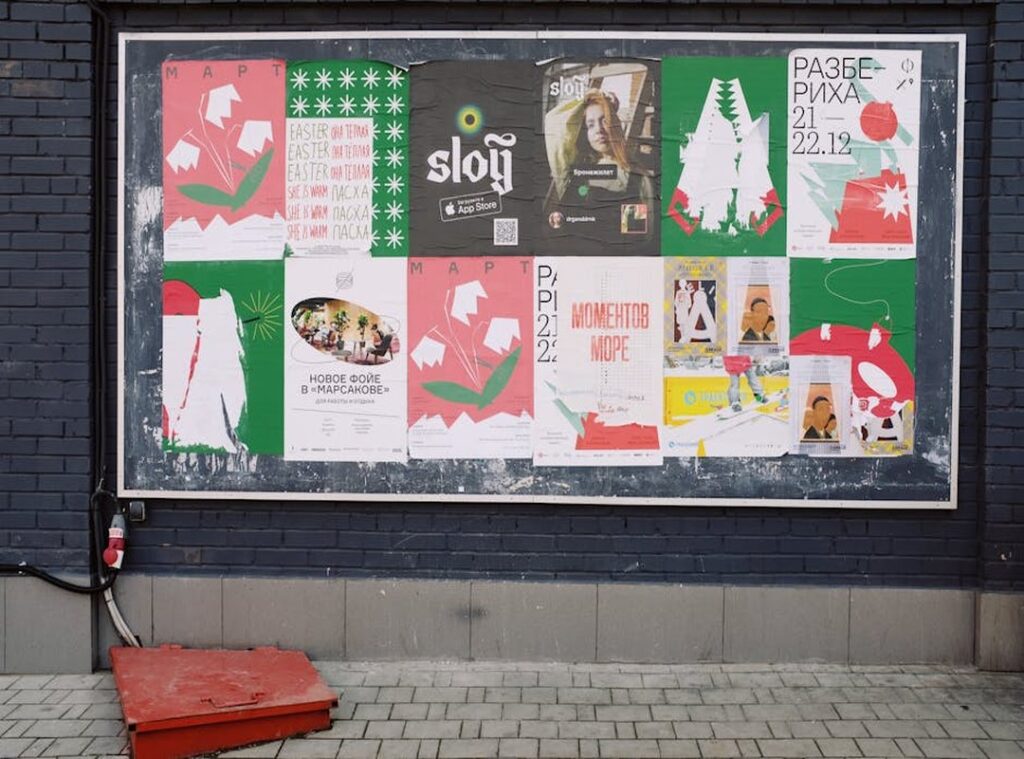
A poster taped crooked to a bulletin board.
Or worse. Buried in a Slack channel, scrolled past in half a second.
I’ve watched people spend hours on fonts and colors (then) wonder why no one reads it.
That’s not design. That’s decoration.
And decoration doesn’t move people.
I’ve spent years designing posters that work: for schools that needed attendance up, for rallies that needed turnout, for nonprofits that needed donations. Not pretty posters. Posters that get read.
That get remembered. That get acted on.
Most guides skip the hard part (they) teach software buttons, not visual plan.
This isn’t about where to click in Canva.
It’s about how to make your message impossible to ignore.
How to Design a Poster Graphic Design Gfxdigitational starts with intention (not) aesthetics.
You’ll learn how to structure information so eyes land where you want them. How to cut words without losing meaning. How to use contrast, space, and type.
Not as flourishes (but) as tools.
I’ve tested every principle here with real audiences. Real deadlines. Real consequences.
No theory. Just what moves people.
By the end, you’ll know exactly how to build a poster that stops scrollers (and) makes them do something.
The Poster Triad: Purpose, Audience, Message
I’ve seen hundreds of posters fail. Not because they looked bad (but) because they skipped one of three things.
Clear purpose means asking: What must happen after someone sees this? Register? Scan?
Call? If you can’t answer that in one sentence, stop designing.
Defined audience isn’t “people who walk by.” It’s who, where, and when. A poster in a college cafeteria targeting grad students needs different language than one in a hospital break room for nurses. (Yes, location changes everything.)
Single-message focus means one idea. Not two. Not three.
One. “Register by Friday” works. “Learn More, Save 20%, Meet Our Team” doesn’t. Your eye can’t split itself.
Skip any one of these. And your poster vanishes. Even with perfect fonts or colors.
I once fixed a poster “Join Our Wellness Program.” No date. No location. No call to action.
It hung for six weeks. Zero sign-ups.
The fix? “Sign up at the front desk before 3 PM today.” Same building. Same budget. Same designer.
Different results.
Eye-catching isn’t loud. It’s contrast that guides the eye in under three seconds. It’s whitespace that gives breathing room.
It’s directional cues. Like arrows or implied lines (that) point to the single message.
How to Design a Poster Graphic Design Gfxdigitational starts here. Not with fonts or gradients.
You don’t need more tools. You need tighter focus.
Typography That Commands Attention (Without) a Font Library
I use two fonts. Exactly two.
Not three. Not five. Not “a system.”
One for headlines. One for body. That’s the 2-font maximum rule (and) it’s non-negotiable.
Headline font? Bold. High-contrast.
Tight tracking. Nothing fancy. Body font?
Highly legible. Generous line height. 24pt+ for print at arm’s length. If your body text looks like it’s whispering, you’ve already lost.
Font pairing fails when weight clashes. Or x-height mismatches. Or mood fights itself.
Try this: put both fonts side by side in real copy. Read them aloud. If one feels like shouting while the other mumbles.
You’re done. Start over.
Here are three free, web-safe pairings that work:
- Montserrat Bold + Open Sans Regular (clean contrast, same neutral tone)
- Playfair Display Bold + Lato Regular (serif/sans with matching warmth)
Decorative fonts in body text? No. Just no.
They belong only in headlines (at) 60pt+, with serious padding. Otherwise they’re visual noise. Not charm.
How to Design a Poster Graphic Design Gfxdigitational starts here (not) with more fonts, but with restraint. Less is legible. Less is noticed.
More is ignored.
Color & Contrast: The Silent Conversion Tool You’re Ignoring
I opened a client’s poster last week. Black text on dark gray. Looked sleek.
Failed WCAG AA hard.
4.5:1 contrast ratio isn’t optional for body text. Try #333333 on #f0f0f0. That’s 4.6:1.
Safe. Now try #666666 on #f0f0f0. It’s 2.8:1.
Unreadable at arm’s length.
Open Chrome DevTools. Right-click any text element. Hit “Accessibility.” It tells you the ratio instantly.
No plugins. No guessing.
I use a 4-color system: dominant (60%), secondary (25%), accent (10%), neutral (5%). Dominant = your background or main type color. Secondary = supporting headings or borders.
Accent = only buttons and CTAs. Not icons. Not headlines.
Just CTAs. Neutral = fine print or disabled states.
Red doesn’t mean “urgent” unless you say “Sale ends in 2 hours.” Otherwise it just looks angry.
Where Do Most Graphic Designers Work Gfxdigitational? Most are freelancing or in marketing departments. Not agencies.
Before printing, verify:
Text-background contrast ≥ 4.5:1
No more than 3 hues active on the page
Accent color appears only on CTA elements
That means fewer art directors to catch contrast fails.
How to Design a Poster Graphic Design Gfxdigitational starts with contrast (not) fonts or layout.
Test every pair. Every time. Even if it looks fine.
Especially if it looks fine.
Layout Hacks That Work. Even If You’re Not a Designer
I used to think good layout required design school. Turns out it’s mostly physics and eyeballing.
The Z-Pattern + Focal Point hybrid works because your eyes don’t read posters like books. They scan top-left → top-right → bottom-left → bottom-right (that’s the Z). Then I drop one bold thing (like) a centered headline or image.
In the bottom third. That’s where attention sticks. Try it.
You’ll feel the difference.
Line height? Set it to 1.5x your font size. Paragraph spacing? 3x.
Section breaks? 5x. No guessing. Measure it once and copy-paste.
The 10-foot test is non-negotiable. Stand back. Can you read the main idea from across the room?
If not, cut text (not) add shadows or gradients. Bigger type beats busier effects every time.
I use three grids daily:
- One-column (for urgency or simplicity)
- Two-column asymmetrical (left-heavy, right-breathing)
Sketch guides help me prototype in under two minutes. (Yes, I keep them printed.)
How to Design a Poster Graphic Design Gfxdigitational isn’t about tools. It’s about forcing your eye where it needs to go (and) stopping it there.
You already know what’s cluttered. Trust that gut.
Cut first. Style later.
From Draft to Done: Your 5-Minute Pre-Print Checklist
I print posters for real people (not) art directors or clients who love vague feedback.
Bleed: 3mm. Not 2. Not 4. 3mm.
CMYK mode.
Not RGB. Your printer isn’t a screen. 300 DPI. Anything less looks soft at arm’s length.
Fonts embedded. Not linked. Not outlined. embedded.
Export as PDF/X-1a.
Not just “PDF.”
Auto-crop? It’ll slice your message in half. Color profiles mismatched?
Your lively red becomes dusty brick. Unembedded images? Blank zones where your hero photo should be.
Here’s the human test: hand the draft to someone who didn’t help make it. Ask them: What’s the main message? What should they do next?
If they hesitate.
Even for two seconds. It’s not ready.
A poster isn’t finished when it looks good.
It’s done when it makes someone act.
That’s why I keep my Gfxdigitational checklist taped to my monitor.
How to Design a Poster Graphic Design Gfxdigitational starts here. Not with fonts, but with intent.
Your First Poster Starts Now
I’ve seen too many posters vanish into the noise. Wasted hours. Wasted budget.
Zero action.
You know that sinking feeling when your message lands flat. It’s not you. It’s the lack of filter.
That’s why purpose, audience, and message aren’t theory.
They’re your only three rules for every decision.
Skip the fluff. Skip the guessing. Go straight to How to Design a Poster Graphic Design Gfxdigitational.
And use only the typography and layout rules from sections 2 and 4.
Pick one poster you’ll redesign this week. Just one. Done right.
No more hoping it works.
This time, it will.
Your message matters. Make sure it’s seen, understood, and acted on.
 Bertha Vinsonalon writes the kind of gen-powered ai solutions content that people actually send to each other. Not because it's flashy or controversial, but because it's the sort of thing where you read it and immediately think of three people who need to see it. Bertha has a talent for identifying the questions that a lot of people have but haven't quite figured out how to articulate yet — and then answering them properly.
They covers a lot of ground: Gen-Powered AI Solutions, Booster Tech Essentials, Expert Insights, and plenty of adjacent territory that doesn't always get treated with the same seriousness. The consistency across all of it is a certain kind of respect for the reader. Bertha doesn't assume people are stupid, and they doesn't assume they know everything either. They writes for someone who is genuinely trying to figure something out — because that's usually who's actually reading. That assumption shapes everything from how they structures an explanation to how much background they includes before getting to the point.
Beyond the practical stuff, there's something in Bertha's writing that reflects a real investment in the subject — not performed enthusiasm, but the kind of sustained interest that produces insight over time. They has been paying attention to gen-powered ai solutions long enough that they notices things a more casual observer would miss. That depth shows up in the work in ways that are hard to fake.
Bertha Vinsonalon writes the kind of gen-powered ai solutions content that people actually send to each other. Not because it's flashy or controversial, but because it's the sort of thing where you read it and immediately think of three people who need to see it. Bertha has a talent for identifying the questions that a lot of people have but haven't quite figured out how to articulate yet — and then answering them properly.
They covers a lot of ground: Gen-Powered AI Solutions, Booster Tech Essentials, Expert Insights, and plenty of adjacent territory that doesn't always get treated with the same seriousness. The consistency across all of it is a certain kind of respect for the reader. Bertha doesn't assume people are stupid, and they doesn't assume they know everything either. They writes for someone who is genuinely trying to figure something out — because that's usually who's actually reading. That assumption shapes everything from how they structures an explanation to how much background they includes before getting to the point.
Beyond the practical stuff, there's something in Bertha's writing that reflects a real investment in the subject — not performed enthusiasm, but the kind of sustained interest that produces insight over time. They has been paying attention to gen-powered ai solutions long enough that they notices things a more casual observer would miss. That depth shows up in the work in ways that are hard to fake.