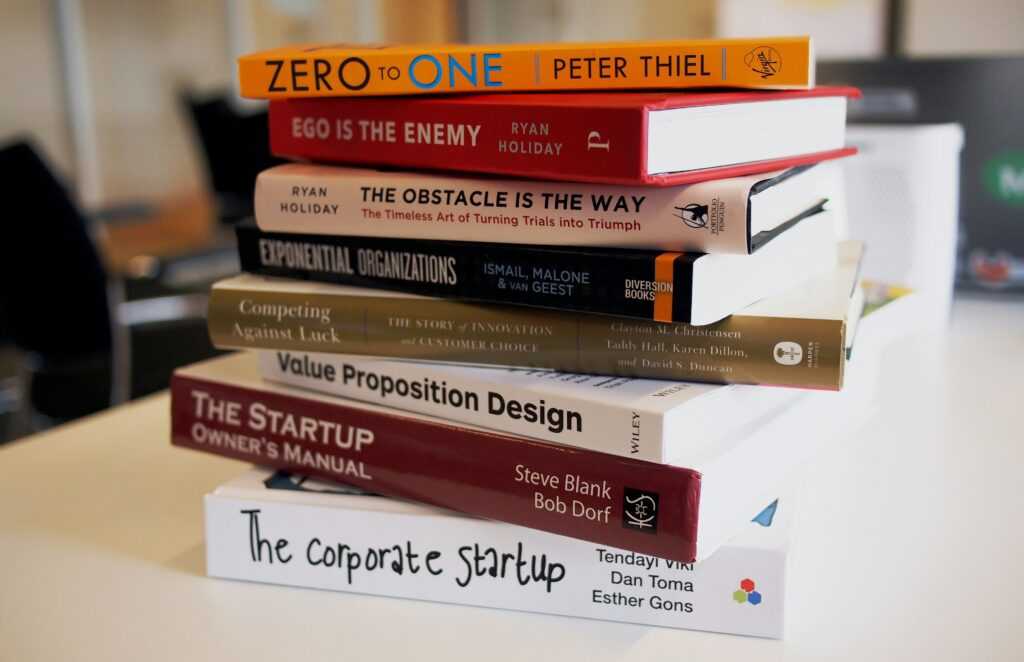
Marketers learn how AI and automation affect their work by pairing foundational reading with a close look at their own workflows and one carefully measured growth experiment. A search for Z library may reveal catalogue listings, but those listings do not establish authorization or lawful access. A useful reading plan covers artificial intelligence, marketing operations and experimentation; no single book can answer every practical question.
Choose books that cover AI, automation, and experimentation
Build a short reading list with three jobs in mind: explain machine learning and generative AI, show how automation fits into business processes, and teach how to test changes. Books that distinguish current capabilities from predictions are more useful than those built around sweeping promises.
The best books explain where human oversight belongs. A system that drafts copy or sorts leads still needs someone accountable for checking accuracy, tone and consequences. Look for practical examples, but treat tool-specific instructions with caution because interfaces and product features date quickly. Use books for durable concepts, then confirm current capabilities through authorized product documentation.
To select titles, compare the author’s expertise, publication date, table of contents and sample pages. Choose one book for AI concepts, one for workflow design and one for experimentation. Check each title in a publisher catalogue, public library, or institutional catalogue before seeking access elsewhere.
Use Z library and other catalogues cautiously
A search for Z library may surface catalogue listings, including z-lib.me. Treat such results as discovery leads, not proof that a digital copy is authorized or that downloading it is lawful where you live. Availability and access terms vary, and a listing does not establish who holds the rights.
The same caution applies to claims of Free books. Verify the rights and terms for the specific title rather than assuming every item is freely available. Copyright rules differ by jurisdiction, so avoid downloading or sharing a copy unless its authorization is clear. Publisher websites, public libraries, a Free library catalogue or an E-library are better starting points for legitimate access. A listing does not necessarily mean a title is free; borrowing rules and digital licenses vary.
Map reading to a real marketing workflow
Reading becomes useful when tied to a process you already know. Pick one, such as campaign research, content production, lead qualification or reporting, and write down how it works today. Note the inputs, decisions, outputs, time constraints and any customer or confidential data involved.
Then separate repeatable tasks from decisions that carry accountability. A tool might summarize research, group inquiries or draft content variations. Name the person who approves outputs, and require that reviewer to check claims, brand fit and sensitive recommendations before publication or action.
This map also exposes where AI is a poor fit. If a task depends on missing context, or an error could harm a customer relationship, start with assistance and review rather than automatic execution. Before entering customer or confidential information into a system, check company policy and the tool’s data-handling terms.
Run one measured growth experiment before scaling
Choose one bounded use case, such as drafting alternate email subject lines or summarizing customer research. State a hypothesis: assisted drafting will reduce production time without lowering the team’s quality rating. Record the current process as a baseline, then define a comparison, measurement window and human review point before testing.
Track the intended outcome and guardrails together. Time saved matters only if accuracy, brand fit and privacy remain acceptable. Keep the audience, review criteria and measurement method consistent. Where feasible, use a concurrent control group or holdout audience that continues with the existing process; this gives the result a more useful comparison than a before-and-after change alone.
At the end, record what worked, what failed and what needs another test. Set a stop rule for poor quality or excessive review time, and expand only when results support it.